Sleep and Fat Loss in Dubai: The Hidden Reason You're Not Losing Weight

The connection between sleep and fat loss in Dubai is something almost nobody brings up at a training check-in — but it's often the missing piece. A client of mine trains three times a week, hits her protein target most days, and has been consistent for almost two months. On paper, she should be seeing steady change. In the mirror and on the scale, almost nothing has moved. When I finally asked how she was sleeping, she laughed and said "what sleep?" — up past midnight on her phone, awake by 6am for work, running on five, maybe six hours most nights.
The Number Nobody Talks About At Check-In
Multiple independent surveys over the past decade have put the share of UAE residents getting insufficient sleep somewhere between two-thirds and nine in ten, depending on the year and the sample. One widely cited poll found that under half of respondents were even reaching seven hours a night, let alone the seven-to-nine window most sleep researchers recommend for adults. Whatever the exact figure, the pattern is consistent: this is one of the most sleep-deprived populations that gets studied, and it isn't close.
Nobody brings this up at a training check-in the way they bring up calories or step count. But it's usually sitting underneath a stalled result the whole time.
Why Dubai Makes This Harder Than It Should Be
Air conditioning is a double-edged sword. You genuinely need it to survive the climate, but the noise and the drying effect of a unit running all night are a well-documented disruptor of deep sleep. A lot of people here sleep in a room that's either too cold and too loud, or warm enough that they're tossing all night — rarely the steady, cool, quiet environment that actual restorative sleep needs.
The city doesn't wind down, so neither do you. Restaurants, malls and gyms stay busy well past midnight, and because so much of the day is spent indoors avoiding the heat, a lot of social and even training life gets pushed later and later into the evening. Ten years of "just one more thing before bed" adds up to a permanently shifted body clock.
Work stress compounds it. Cost of living pressure, long commutes and a genuinely demanding professional culture are consistently cited as the leading reasons residents say their sleep is disrupted. Elevated cortisol from that kind of daily pressure makes it physically harder to switch off at night, even when you're exhausted — which ties in closely with what I've written before about stress belly and why a stressed body holds onto fat differently than a rested one.
What Poor Sleep Actually Does To Fat Loss
This isn't a vague wellness talking point — the sleep and fat loss relationship is backed by specific, well-understood mechanisms.
It shifts your hunger hormones against you. Short sleep reliably raises ghrelin, the hormone that drives hunger, and lowers leptin, the one that signals fullness. Practically, that means a genuinely harder time controlling portions and cravings the next day, regardless of how much willpower you think you have.
It blunts insulin sensitivity. Even a few nights of restricted sleep measurably reduces how efficiently your body handles carbohydrates, which pushes more of what you eat toward storage rather than use. This is one reason two people can eat an almost identical day of food and get very different results, depending on how rested they are.
It compromises recovery, which compromises training quality. Muscle repair and a large share of growth hormone release happen during deep sleep. Cut that short consistently and your sessions stop producing what they should — you're putting in the work but not banking the adaptation, which is often the real explanation behind a plateau that looks, from the outside, like a training or nutrition problem.
It raises cortisol. Sleep deprivation is itself a stressor, and a body running on chronically elevated cortisol tends to hold onto abdominal fat specifically, on top of everything else working against it.
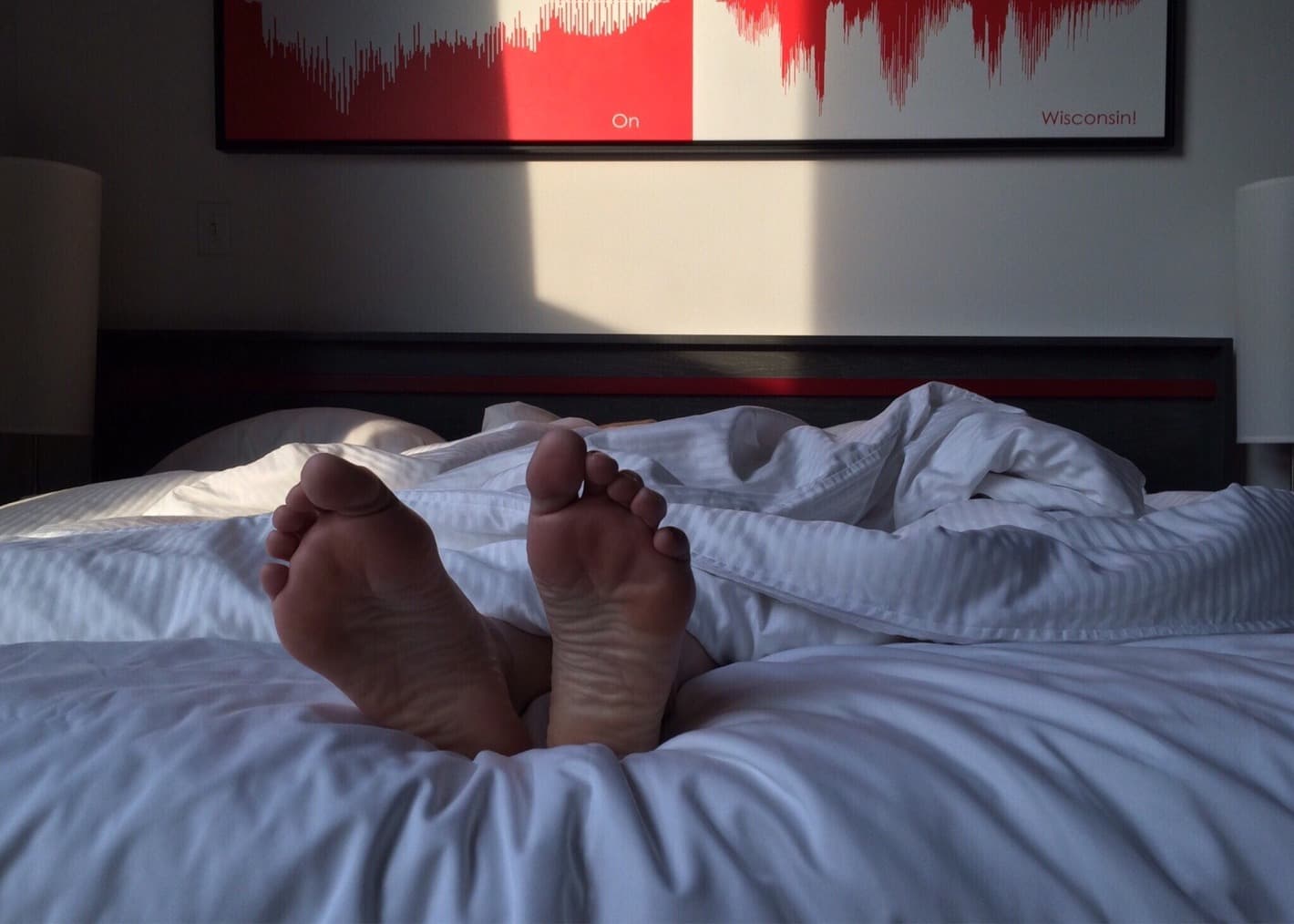
Fixing This Without Turning Into A Sleep Obsessive
You don't need a blackout tent or a 2000 Dhs mattress. A handful of changes, done consistently, cover most of the benefit:
- Set the room temperature once, properly, instead of fighting it all night. Somewhere around 20–22°C with the unit on a quiet or timed setting tends to work far better than blasting cold air on full power until you wake up shivering at 4am.
- Give yourself a real wind-down window. Screens off, lights dimmed, roughly 30–45 minutes before you actually want to be asleep. This matters more than almost any supplement.
- Keep your last big meal and any caffeine earlier in the day. Heavy food or a late coffee both make it harder for your body to settle, and this is one of the simplest things a proper nutrition plan can adjust for once we see your actual routine.
- Train earlier when you can. A late, intense session pushes cortisol and body temperature up right when they should be coming down. If evenings are your only option, an air-conditioned session at one of the best gyms in Dubai beats an outdoor one purely for how much easier it makes it to settle afterward.
- Protect a consistent wake time, even on weekends. Sleeping in until noon on a day off feels like recovery, but it shifts your body clock and tends to make the following two or three nights worse, not better.
How This Fits Into Training With Me
I don't program purely off a training log and a food diary. If someone is doing everything "right" and still not changing, the sleep and fat loss link is one of the first things I check — because it explains a huge share of the plateaus that otherwise look mysterious. That's part of why personal training in Dubai with a coach who actually knows this city works differently than a generic program: session timing, intensity and even nutrition targets all get adjusted around your real sleep pattern, not an idealized one. It's also exactly what I build into every online training plan for clients who travel or work irregular hours.
Book a free consultation and let's look at what's actually happening outside the gym — it's often the missing piece.
Book a Free ConsultationFAQ
Yes. Poor sleep raises hunger hormones, lowers your body's ability to handle carbohydrates properly, and increases cortisol — all of which work against fat loss independently of how well you're eating or training.
Most adults need somewhere between seven and nine hours. Fewer than that on a regular basis is where the hormonal and recovery downsides start to show up.
Not really. It can take the edge off short-term fatigue, but it disrupts your body clock and tends to make it harder to sleep well over the following nights, so it isn't a substitute for consistent sleep across the week.
A short 15–20 minute nap earlier in the day can help with alertness, but it won't replace the deep-sleep cycles you only get from a full, uninterrupted night.