Stress Belly: Why Your Midsection Won't Shrink, Even When Everything Else Is Dialed In
I get some version of this message at least once a month. Usually from someone doing everything "right" — training consistently, watching what they eat, not drinking much — and still carrying a stubborn layer around the stomach that won't move no matter what they cut.
Nine times out of ten, when we dig into their actual week, the missing piece isn't food or training volume. It's that they're running on five and a half hours of sleep, back-to-back calls, three flights a month, and enough coffee to function through it. Nobody built a program for that person's stomach — they built one for their macros.
This is what people mean by a "cortisol belly," and while the term gets thrown around loosely online, the biology behind it is real and reasonably well understood. Here's what's actually going on, and what's worth doing about it.
What Cortisol Actually Does (and Why It Cares About Your Stomach Specifically)
Cortisol is a hormone released by your adrenal glands as part of the hypothalamic-pituitary-adrenal axis — the HPA axis — your body's central stress-response system. Short version: your brain perceives a threat, signals your adrenal glands, and cortisol gets released to raise blood sugar and mobilize energy so you can deal with whatever's in front of you.
That system was built for short, sharp stress — a genuine threat that resolves in minutes. The problem is that a demanding job, constant travel, poor sleep and financial pressure don't register to your body as "resolved in minutes." They register as an ongoing threat, which keeps cortisol elevated for weeks or months at a time instead of spiking and dropping the way it's designed to.
Fat tissue deep in the abdomen — visceral fat, the kind sitting around your organs rather than just under the skin — has a notably higher concentration of cortisol receptors than fat elsewhere on the body. This is a long-established finding in endocrinology research going back to work by Swedish researcher Per Björntorp in the 1990s, and it's why chronically elevated cortisol doesn't distribute fat evenly — it preferentially routes it into the midsection.
This is also why this kind of belly fat often feels different — firmer, sitting deeper — than fat elsewhere on the body, and why it can be frustratingly resistant to a calorie deficit that's working everywhere else.
Sleep Is the Part Nobody Wants to Hear About
If I had to pick the single most underrated lever here, it's sleep — and there's decades of data on this, not just wellness-industry talking points.
One of the earlier and more cited studies on this, out of what's now Penn State's sleep research group, put healthy young men through partial and total sleep deprivation and tracked their cortisol over the following day. Even one night of partial sleep loss delayed the normal evening decline in cortisol and pushed evening levels meaningfully higher the next day. More recent research using continuous daily cortisol sampling has kept confirming the same pattern — shorter, lower-quality sleep is consistently associated with a flatter, less healthy cortisol rhythm the following day.
What this means practically: if you're sleeping five hours a night because your calendar doesn't allow more, your cortisol curve is elevated before you've had your first coffee, your first meeting, or your first stressful email. No amount of clean eating fully offsets that.
I'm not going to pretend I can fix everyone's sleep — some of my clients genuinely can't get eight hours with the schedule they're on. But almost everyone I work with can protect one lever: a consistent wake time, even on weekends, and a hard stop on screens 30–45 minutes before bed. Those two changes alone move the needle more than most supplements ever will.
Why "Just Train Harder" Usually Backfires
This is the part that surprises people. The instinct when nothing's moving is to add more — more cardio, more fasted sessions, more intensity. For someone who's already under a lot of psychological stress, this can genuinely make things worse.
To be fair to the science here, the research on how exercise itself affects cortisol is mixed — some studies show resistance training acutely raises cortisol (which is normal and part of how you build muscle), others show a calming effect over time, and a lot depends on training volume, intensity and how well-recovered you are going in. I'm not going to oversimplify that into a clean rule, because the evidence doesn't support one.
What I can say from over a decade of coaching people in this exact situation: piling high-intensity training on top of someone who's already sleep-deprived and mentally maxed out rarely produces the results they're chasing. It tends to produce more fatigue, worse sleep, and — because appetite regulation is also disrupted by chronic stress — more of the exact cravings that make a deficit hard to sustain. The training itself doesn't need to be softer. It needs to be structured, with real recovery between sessions, rather than added on top of an already overloaded system.
What tends to actually work is:
- Resistance training 3–4x a week with proper rest between sets, aimed at building and preserving muscle rather than maximizing how exhausted you feel afterward.
- Daily low-intensity movement — walking is the simplest lever most people ignore. It doesn't add meaningful physical stress but reliably helps mood, digestion, and sleep quality.
- Fewer, better sessions instead of squeezing in extra "just in case" workouts on top of an already packed week.
If you're interested in how structured training can be used to build fitness without simply adding more volume, you can also read my guide to circuit training.
The Dubai-Specific Layer
A few things make this particular pattern show up more often here than in a lot of other places I've trained:
The heat cuts your baseline movement. From roughly May to September, all the incidental walking, outdoor activity and weekend movement that would normally offset a sedentary desk job disappears for most people. That's a real drop in daily energy expenditure that often goes unnoticed.
Travel and time-zone shifts are constant. A lot of my clients are on a flight every few weeks. Jet lag itself disrupts your cortisol rhythm independently of stress — it's essentially asking your HPA axis to reset its clock repeatedly.
Caffeine culture runs deep. Coffee itself isn't the enemy — for someone who's genuinely well-rested, a normal cortisol/caffeine response is transient and harmless. The issue is using three or four coffees to override five hours of sleep, which keeps cortisol elevated on top of an already elevated baseline instead of giving your body the recovery it's asking for.
The dinner culture is real, and it's not going away. Client dinners, late business meetings, social obligations — these aren't things I ask clients to give up. They're things we plan the rest of the week around.
That same real-life approach is important when choosing where to train. If you're looking for a facility that fits your routine, my guide to the best gyms in Dubai covers the main options and what each type of gym is actually suited for.
What I Actually Do With Clients Dealing With This
There's no single fix, and anyone promising a three-step protocol to "flatten your midsection" is oversimplifying a genuinely complex hormonal picture. What I focus on with clients in this situation:
- We fix training structure first — proper resistance training with real recovery, not more volume on top of exhaustion.
- We protect one or two sleep anchors that are realistic given their actual schedule, rather than an idealized routine they'll abandon in a week.
- We adjust nutrition timing, not just content — for some clients, shifting more carbohydrates to the evening genuinely helps sleep quality, since carbohydrate intake supports the insulin response that helps lower circulating cortisol and can ease the transition into deeper sleep.
- We track more than the scale — waist measurement, energy levels, sleep quality and strength progress tend to move well before the number on the scale does in these cases.
- We loop in a doctor when it's warranted. Persistent, unexplained abdominal weight gain alongside fatigue, mood changes or irregular sleep can sometimes point to a thyroid issue or another underlying condition that training and nutrition alone won't fix. If that's a possibility, I'll tell you to get bloodwork done before we keep pushing training harder.
On supplements — magnesium and ashwagandha come up constantly online in this context. Some smaller clinical trials on ashwagandha have shown modest reductions in self-reported stress and cortisol markers, and magnesium is worth having enough of simply because a lot of people are mildly deficient and it supports normal sleep and nervous system function. I'd treat both as a minor supporting piece, not a fix, and I'd rather a client speak to their doctor before adding either one, especially if they're on any medication.
None of this requires a specific gym — I train clients in private studios, building gyms, home setups and, for people who prefer a bigger facility, well-equipped commercial gyms like TrainSF or Oxygen Gym work fine too. (If you're weighing your options, I put together a full breakdown of Dubai's gyms, pricing and what each one is actually good for.) The environment matters less than the structure of what happens inside it.
For people who are specifically trying to change their body composition rather than simply make the scale move, my guide to body recomposition explains why preserving muscle matters during fat loss.
And if you're trying to understand the bigger picture of sustainable fat loss, you can also read how to lose weight effectively without relying on extreme approaches.
A Real Example: Vaso's Story
One example of what this kind of long-term approach can look like is Vaso Kandić. He came to me looking for more than simply another workout routine — the goal was to change the way he trained, eat and approached his overall lifestyle.
Over time, the work went beyond what happened inside the gym. Training became part of a wider change in his habits, consistency and daily routine. Vaso has described working with me as something that helped him make better decisions, feel better and look better in his forties than he did in his mid-20s.
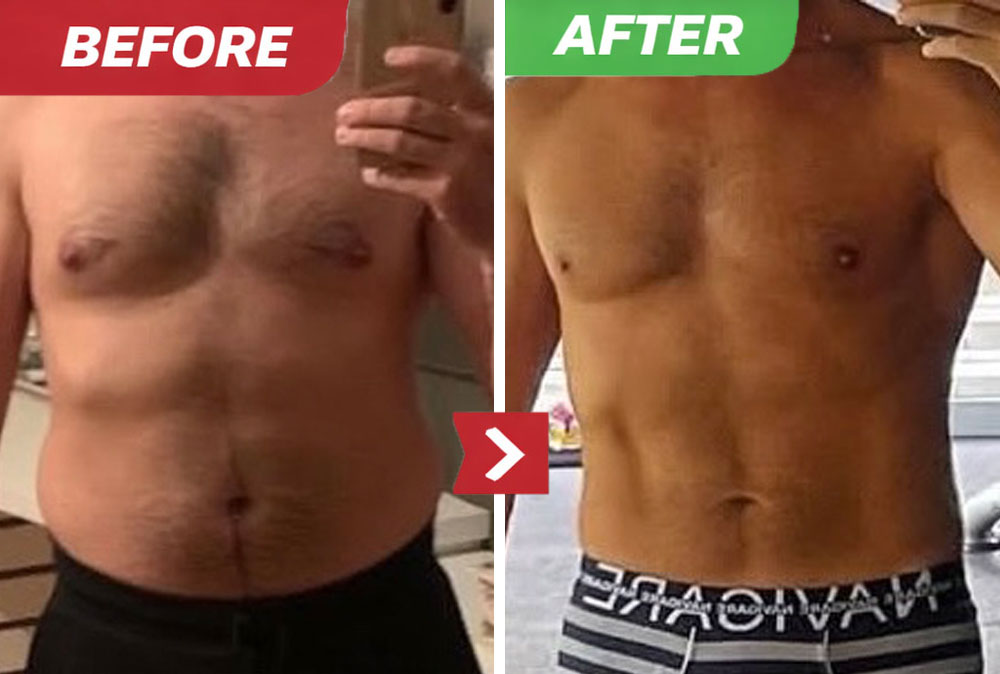
If you want to see the complete story, his experience with me and the full transformation, read the full client story and see more transformations.
If This Sounds Like You
If you're eating reasonably well, training consistently, and still stuck with a midsection that won't move, it's worth stepping back from "eat less, move more" and looking at your sleep, your travel schedule, and how your training is actually structured around your stress load — not just your goals.
I'm Marko — MSc in Sports Science, NASM-certified, 14 years training people in Dubai, most of them busy professionals dealing with exactly this. Book a free consultation and we'll go through your actual week — not a generic template — and figure out where the real bottleneck is.
Ready to take a closer look at what's actually holding your progress back?
Explore Personal Training in DubaiFAQ
Not as an official diagnosis — it's a popular term for abdominal fat linked to chronically elevated cortisol from ongoing stress and poor sleep. The underlying mechanism (visceral fat's sensitivity to cortisol) is well documented, even if the label itself is informal.
For most people, yes. Consistent sleep, structured (not excessive) training, daily walking and realistic stress management make the biggest measurable difference. Supplements can play a small supporting role but aren't a replacement for those fundamentals.
Energy and sleep quality often improve within 2–3 weeks of consistent changes. Visible changes in body composition typically take 8–12 weeks, since you're addressing a hormonal pattern that usually took months or years to build up.
If abdominal weight gain is showing up alongside persistent fatigue, mood changes, or irregular sleep, it's worth talking to a doctor and getting bloodwork done, partly to rule out thyroid or other hormonal issues that can look similar.