
Dubai has thousands of personal trainers. Some are excellent, some are average, and a few should not be working with clients at all. From the outside they all look similar: a good Instagram feed, a confident smile, and a promise of results in a few weeks. Choosing between them is harder than it should be, and a bad choice costs more than money. It can cost you months of progress or an injury that sets you back.
I’m Marko Vuleta, founder of trainersdubai.com, and I train clients one-to-one at hybriDXB, my private studio in Al Quoz. I’ve also hired and managed trainers, which means I’ve seen this from both sides: what clients look for, and what separates a trainer who delivers from one who just looks the part. This guide covers what I would check if I were the one hiring.
Step 1: Check that the trainer is registered
In the UAE, the first question is not “How many followers do you have?” but “Are you registered with REPs UAE?”
The Register of Exercise Professionals (REPs UAE) is the public register for fitness professionals in the country, working alongside the Dubai Sports Council. Registration confirms that a trainer’s qualifications meet an agreed standard, and the register is public, so you can look a trainer up on the REPs UAE website in a few minutes. Any serious trainer will be glad to show you their registration.
Two related things worth asking about:
- Professional liability insurance. If something goes wrong during a session, you want to know there is cover. A trainer who has never heard of it is a trainer to be careful with.
- First aid / CPR. It should be current, not something done five years ago.
Step 2: Look at qualifications, but read them correctly
A degree in sports science is a real advantage, because it means the trainer has studied anatomy, physiology, and programming in depth. But a degree is not the only route, and plenty of well-qualified trainers come through respected certifications such as NASM. What matters is that the education is real, relevant, and kept up to date.
What I would look for:
- A recognised personal training qualification (Level 3 or higher) accepted by REPs UAE
- Extra education in the area you care about, such as nutrition, corrective exercise, strength training, or working with older adults
- Evidence of continuing education, not just a certificate from ten years ago
Be wary of long lists of weekend courses with no practical experience behind them. A shelf of certificates does not replace hours spent coaching real people.
Step 3: Match experience to your goal
This is the point most people skip, and it’s often the most important one.
Experience in general is good, but experience with people like you is better. A trainer who spends most of their time preparing bodybuilders for competitions may not be the best choice if you want to lose weight after a desk-job year, rebuild after an injury, or improve your boxing. The skills overlap, but they are not the same.
Ask directly:
- What types of clients do you usually train?
- Have you worked with someone with my goal and my starting point? What happened?
- How do you adjust a program when progress stalls?
A good trainer answers with specifics. A weak one answers with “I train everyone.” Personalisation is where a good trainer earns the fee, because a template you could download for free is worth nothing.
Step 4: Pay attention to the first session
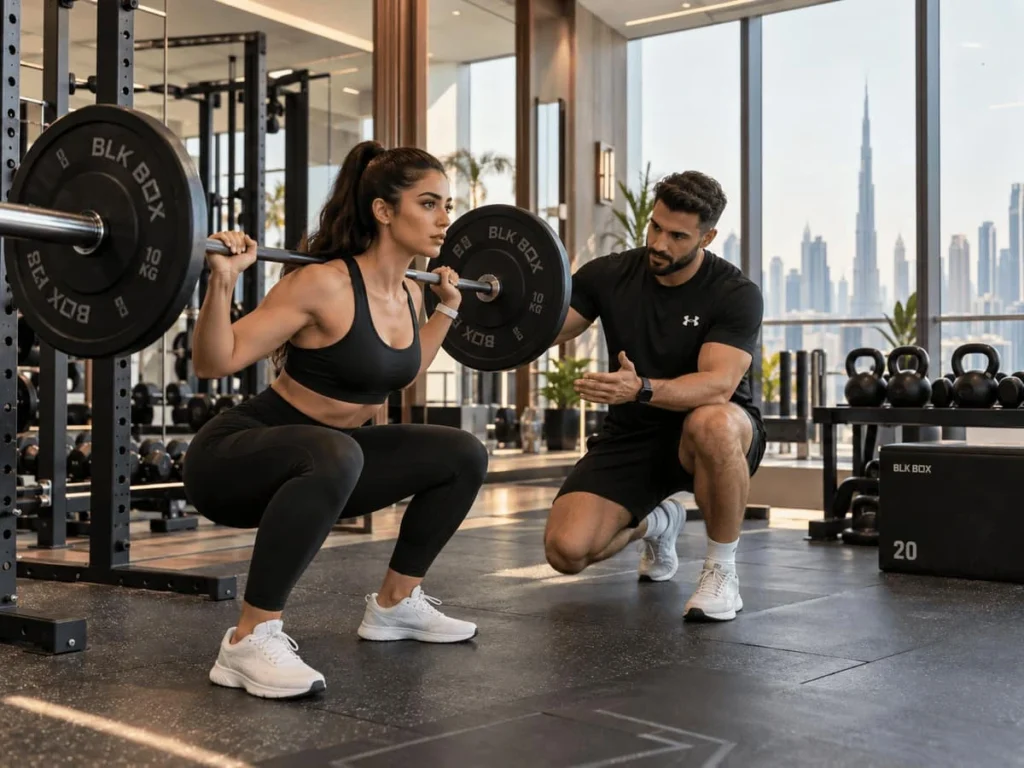
The first session tells you almost everything. A good trainer will:
- Ask about your health, previous injuries, medication, sleep, stress, and daily routine
- Assess movement: mobility, posture, and basic strength, before loading anything heavy
- Ask what you want to achieve and by when, and tell you honestly if the timeline is realistic
- Write things down, in a notebook, a phone, or an app, so progress can be tracked from session to session
If you are under a doctor’s care or have a medical condition, a responsible trainer will ask you to get medical clearance before pushing intensity. That is not an obstacle, it’s a sign that the trainer takes your safety seriously.
Red flags: when to walk away
- No assessment, no questions. Jumping straight into a workout with no idea about your history is not coaching.
- Nothing is recorded. Without notes, you cannot track progression, and the program becomes random.
- Guaranteed results. Anyone who promises a specific number of kilos in a specific number of weeks is selling, not coaching. Bodies respond differently, and honest trainers say so.
- Heavy supplement pushing. Supplements can have a role, but a trainer who leads with products before looking at your food, sleep, and habits has the priorities the wrong way round.
- Constant phone use or distraction. You are paying for attention.
- No clear cancellation or package policy. Know what happens if you need to reschedule, and whether sessions expire.
- Pressure to buy a large package right away. A good trainer lets you start with a consultation or a trial session.
Gym trainer, home trainer, private studio, or online?
Each format has a place. The right choice depends on your schedule, budget, and how you like to train.
| Format | Best for | Things to consider |
|---|---|---|
| Gym trainer | People who already have a membership and like the gym atmosphere | Shared space, equipment waiting, trainer availability tied to the gym |
| Home or villa training | Busy schedules, people who dislike traffic and crowds | Limited equipment, trainers often charge for travel time |
| Private studio | Privacy, focused sessions, full equipment without crowds | Usually a higher price per session |
| Online coaching | Frequent travellers, tighter budgets, accountability between sessions | Needs discipline; form checks rely on video |
Many of my clients combine formats: sessions in the studio once or twice a week, plus an online plan for the days in between. If you want to see how that works, have a look at my online training and nutrition plan options.
How much does a personal trainer cost in Dubai?
Prices vary widely, and a higher price does not automatically mean a better trainer. As a rough guide for 2026:
- Typical range: around 250 to 500 AED per session for most trainers
- Premium and specialised trainers: 600 AED and up. At hybriDXB, for example, a private one-to-one session is 600 AED, with packages reducing the cost per session.
- Packages: 10 or 20 sessions usually bring the price per session down, but check the expiry date before you commit.
What affects the price: the trainer’s experience and specialisation, whether the session is in a gym or a private studio, travel to your home, session length, and whether nutrition guidance is included. Instead of asking only “How much?”, ask “What exactly am I getting for this?”
Dubai-specific things worth knowing
- Heat. From roughly May to September most clients move to early mornings or indoor training. A trainer who plans for this (and offers outdoor alternatives in winter) is thinking about your consistency.
- Ramadan. Training times and intensity shift. A good trainer adjusts your program rather than ignoring the change.
- Schedules. Dubai runs on long days and frequent travel. Ask how the trainer handles missed sessions and business trips. Flexibility matters more than people expect.
- Seasonal motivation. The annual Dubai Fitness Challenge is a good moment to start, but pick a trainer for the long run, not just for 30 days.
Questions to ask before you hire
Take these to your first consultation (a good trainer will offer one for free or for a small fee):
- Are you registered with REPs UAE, and do you have liability insurance?
- What is your experience with clients who have a goal like mine?
- How will you assess me before we start?
- How will we track progress, and how often will we review it?
- What happens if I miss or cancel a session?
- Do you also give guidance on nutrition, or work with a nutritionist?
- What results can I realistically expect in 8 to 12 weeks?
Notice how the trainer answers, not only what they say. You’ll be working closely with this person for months, so personality and communication matter. If you don’t feel comfortable asking questions, that’s useful information as well.
What a good trainer-client relationship looks like
After a few weeks you should be able to say:
- I understand why I’m doing each exercise
- My program changes as I get stronger
- I’m learning how to train and eat, not just following orders
- My trainer is honest with me, even when the news is not what I wanted to hear
The best trainers work towards making you more independent over time, not more dependent on them. If you want to understand the basics yourself, my articles on the components of fitness and strength training rules are a good place to start, and so is sleep and fat loss, which many people underestimate.
What a good trainer-client relationship looks like
Do I need a trainer with a sports science degree?
It helps, but it’s not the only route. Look at the full picture: recognised qualification, REPs UAE registration, relevant experience, and how the trainer works with you.
How many sessions per week do I need?
For most people, two or three structured sessions per week are enough, combined with a plan for the other days. More is not always better, because recovery is part of progress.
Is it better to choose a male or female trainer?
That’s personal preference. Some clients feel more comfortable with one or the other, and a good trainer will respect that. What matters most is competence and the way they work with you.
How long until I see results?
Early changes in energy and strength often show up within a few weeks. Visible physical change usually takes 8 to 12 weeks of consistent training and nutrition. Be careful with anyone who promises faster.
Can I switch trainers if it isn’t working?
Yes, and you shouldn’t feel guilty about it. If after a few sessions you feel the program is not personalised or the trainer is not listening, it is reasonable to move on.
Where can I find trainers to compare?
Start with word of mouth and Google reviews, then browse profiles on directories such as TrainersUAE. Book a consultation with two or three trainers before deciding, so you can compare how they work.
Final thoughts
The right personal trainer in Dubai is registered, qualified, experienced with goals like yours, honest about what’s realistic, and someone you actually like working with. Take your time, ask questions, and don’t be pushed into a decision.
If you live in Dubai and you’d like to see how I work, read about my approach on the personal trainer in Dubai page or get to know me and read what clients say on the testimonials page. To book a free consultation, visit hybriDXB.
About the author: Marko Vuleta is a certified personal trainer with a degree in Sports Science from the Faculty of Sport in Novi Sad and NASM certification. He is the founder of trainersdubai.com and trains clients at hybriDXB in Dubai.


One Response
Funny thing is, what I noticed about Dubai coaches.. The more you pay the better service you actually get. In other businesses that’s not always the case, but in this one I feel that a coach would be highly motivated to help me achieve something—if I paid him better.